Light After Sunset
The observable need is usually simple: a step you can't see in October, a shed door you fumble for, a row of stake lights that glowed in June and died by November. Solar lighting avoids trenching mains cable through a garden, but it lives or dies on three things: keeping water out, sizing for winter rather than summer, and treating batteries with respect.
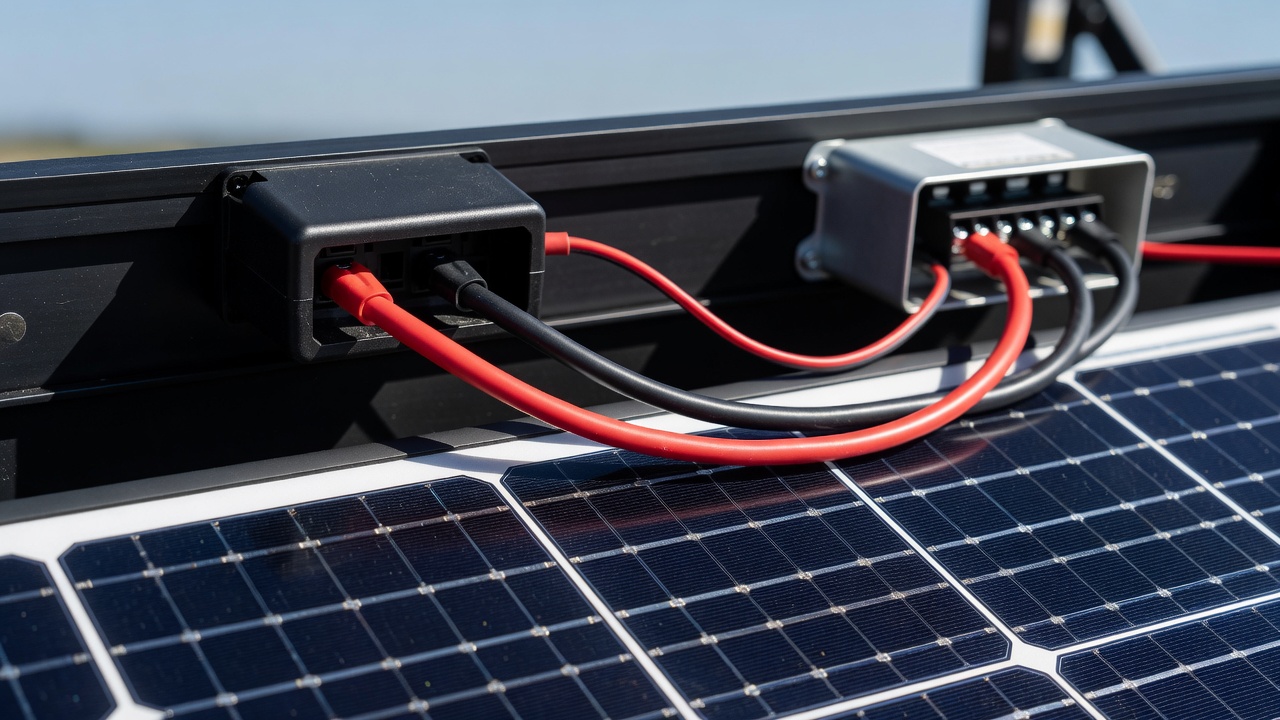
Know what's inside a stake light
A typical solar stake light holds a small solar cell, a rechargeable AA or AAA NiMH cell at 1.2 V, a tiny boost driver that raises that voltage enough to light an LED, and a dusk sensor. Often the dusk sensor is the panel itself: when its voltage falls in the evening, the LED switches on.
When one fails, open it before you bin it. Most failures are corroded contacts and water pooling around the battery, not dead electronics. Replace a tired cell with the same chemistry and size. Never put a lithium cell into a holder designed for NiMH; the voltage and charging behaviour are completely different.
Tool list and purpose
- Small screwdriver set – opens housings without cracking clips
- Fresh NiMH cells of matching size – restore capacity safely
- Contact cleaner or fine abrasive pad – removes corrosion
- Neutral-cure outdoor silicone – reseals joints without attacking plastic
- Multimeter – checks panel voltage in daylight and battery voltage at dusk

Fix the seal before the battery
Ingress protection ratings tell you how well a housing resists water. IP44 resists splashes; IP65 resists water jets and is a sensible minimum for anything sitting in a border through winter. Many budget lights claim a rating they don't reach once the gasket hardens.
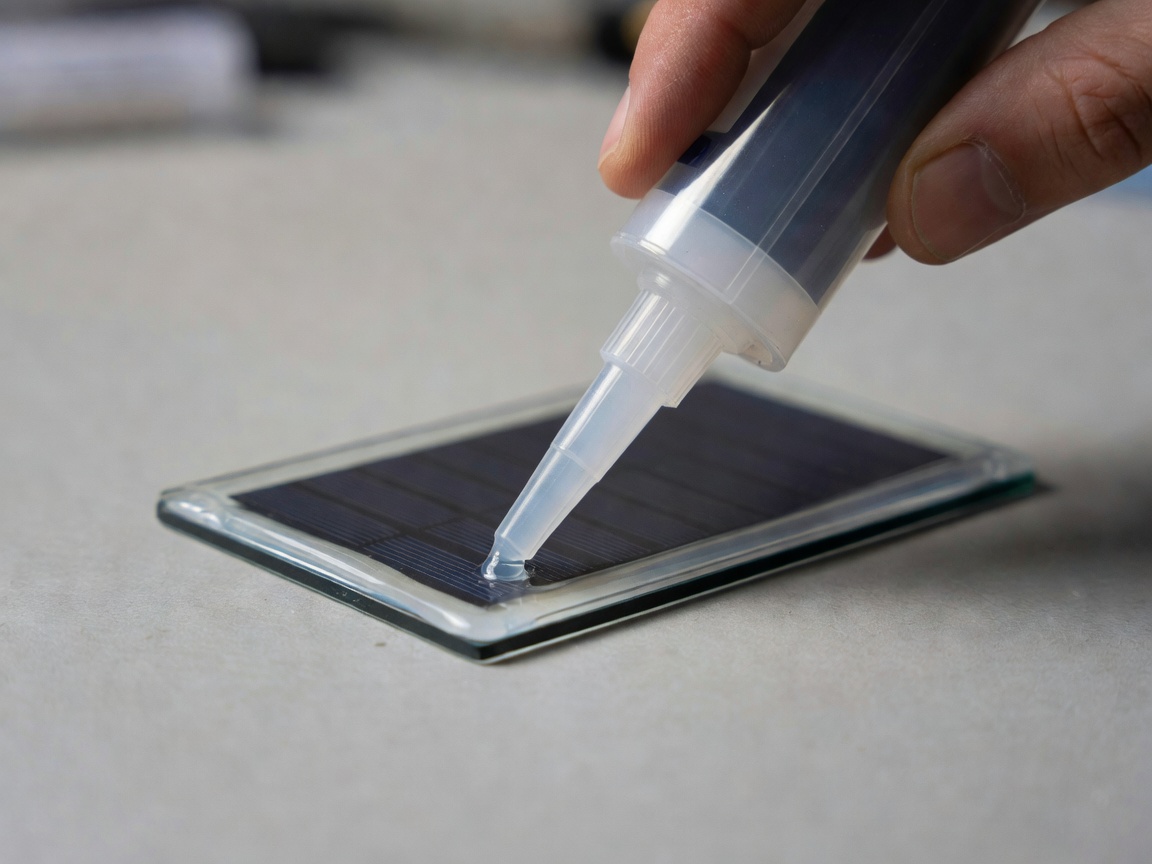
Dry the housing indoors, replace or reseat the gasket, and run a thin bead of neutral-cure silicone along the panel edge. Leave a tiny weep hole at the lowest point, facing downward, so condensation can escape rather than pool. Test by spraying the closed light with a hose for a minute, then opening it to check for moisture.
Aim the panel at winter
In the Northern Hemisphere, face panels south. A tilt of roughly your latitude plus 15° favours low winter sun. Stand where the panel will go at midday in December, or imagine it: if a fence, hedge or house shadow falls there, move it. Panels lose most of their output in partial shade.
Build a bigger path-light circuit
For real path lighting, a small low-voltage system works well: a 10–20 W panel, a PWM or MPPT charge controller, a 12 V LiFePO4 battery with a built-in battery management system (BMS), warm white 12 V LED strip or spotlights, and a PIR motion sensor.
Size for the worst month. Five 0.6 W LEDs on for five hours use 15 Wh a night. In a UK December you might average around one peak sun hour, so a 10 W panel at 70% real-world efficiency gives about 7 Wh. That's not enough. Add a PIR so lights only run when someone walks by, dim them, or fit a larger panel.
Light gently
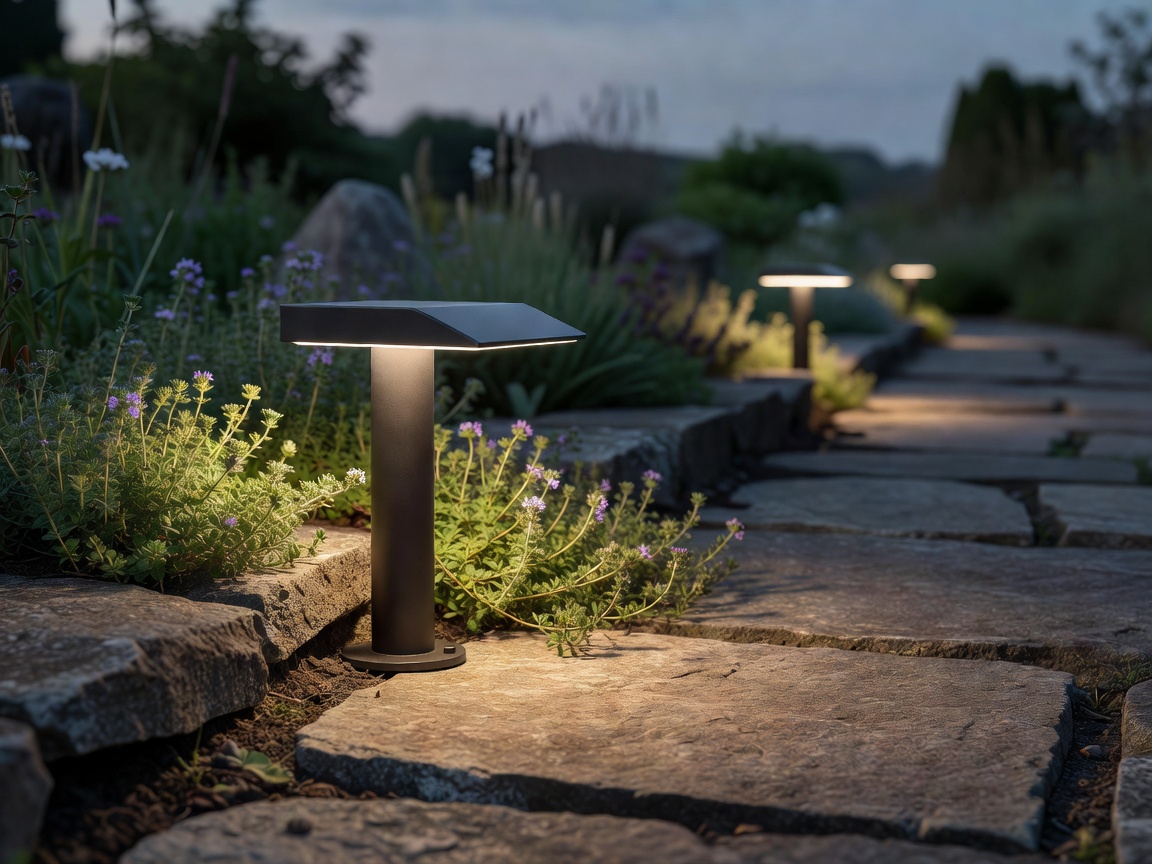
Gardens are habitat. Bats and night-flying moths are disturbed by bright, cool-white light. Guidance from DarkSky International favours warm colour temperatures of 3000 K or lower, shields that point light downward, and only as much brightness as the task needs. Motion sensors help here too: darkness most of the night, light when someone is on the path.