Store Rain Wisely
Watch a downpipe during a summer storm and you'll see the problem: hundreds of litres rushing into a drain, followed by a dry fortnight with the hose out. Rainwater collection turns that surge into a reserve. Plants also tend to prefer rain to hard tap water. This route starts with roof maths, then covers fittings, overflow, the real limits of gravity, and automated planters that draw from a reservoir.
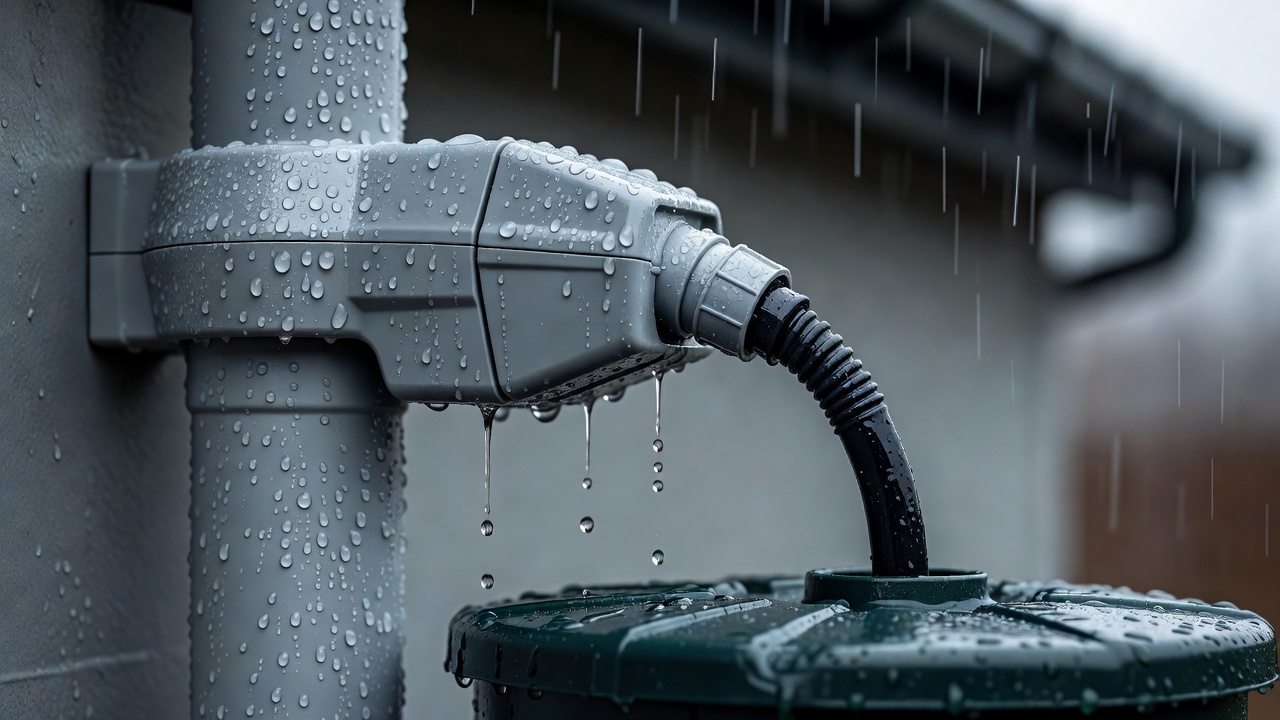
Measure your roof first
The working rule is simple: 1 mm of rain falling on 1 m² of roof yields 1 litre. Measure the footprint of the roof (its plan area, not the sloped surface) that drains to one downpipe. A 15 m² shed roof in a month with 50 mm of rain catches about 750 litres; allow for losses from splash, evaporation and first-flush, and around 600 litres is realistic.
For local rainfall averages, check your national weather service, such as the Met Office in the UK or NOAA in the US. Compare monthly figures with your summer watering needs, and you'll know whether one 200-litre butt is plenty or whether linking two or three makes sense.
Tool list and purpose
- Tape measure – roof plan area per downpipe
- Downpipe diverter with auto-overflow – fills the butt without flooding it
- Leaf guard and fine mesh screen – keeps debris and mosquitoes out
- Butt stand on firm, level paving – a full 200 L butt weighs about 200 kg
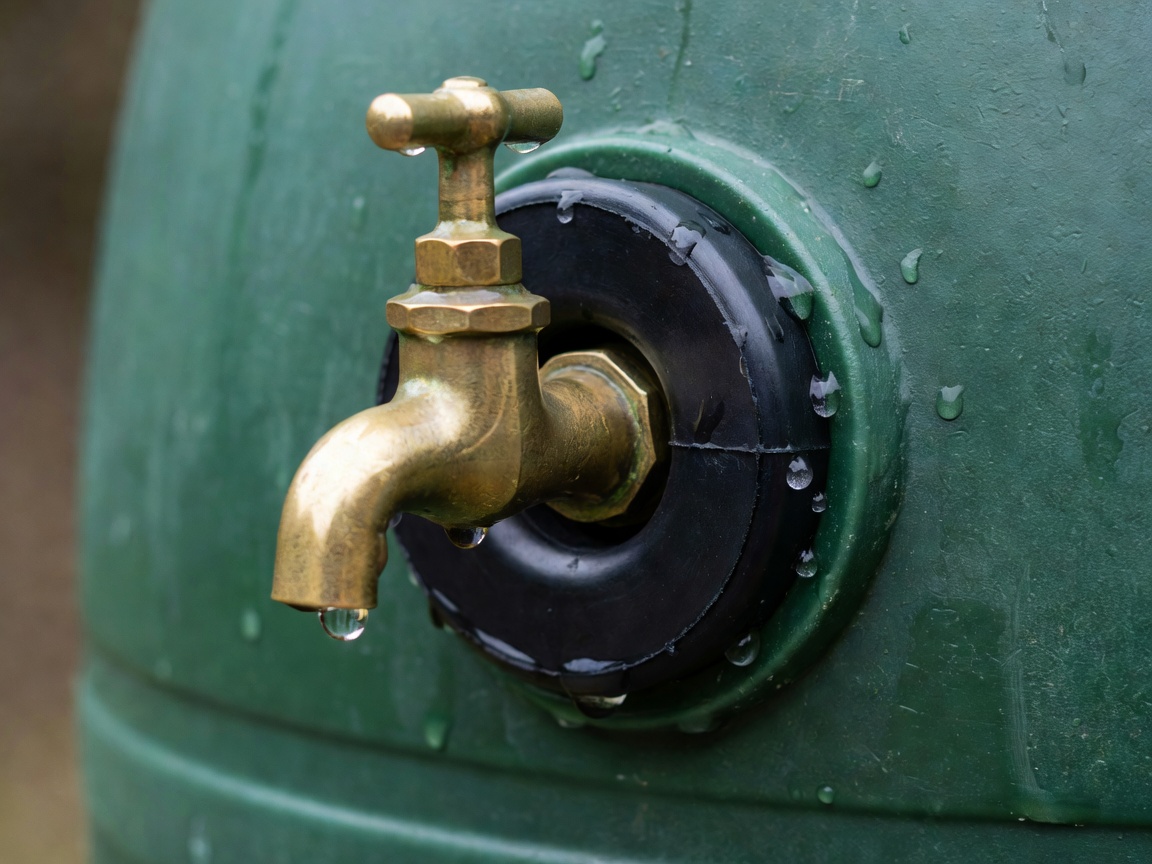
- 3/4-inch BSP tap with washers and PTFE tape – a drip-free outlet
Divert, screen and plan the overflow
A full butt still has to cope with the next storm. A diverter with auto-overflow sends water back down the downpipe once the butt level reaches the diverter height. If you use a simple overflow outlet instead, pipe it to a drain, soakaway or rain garden well away from house walls and foundations, never onto a neighbour's land or a path that freezes.
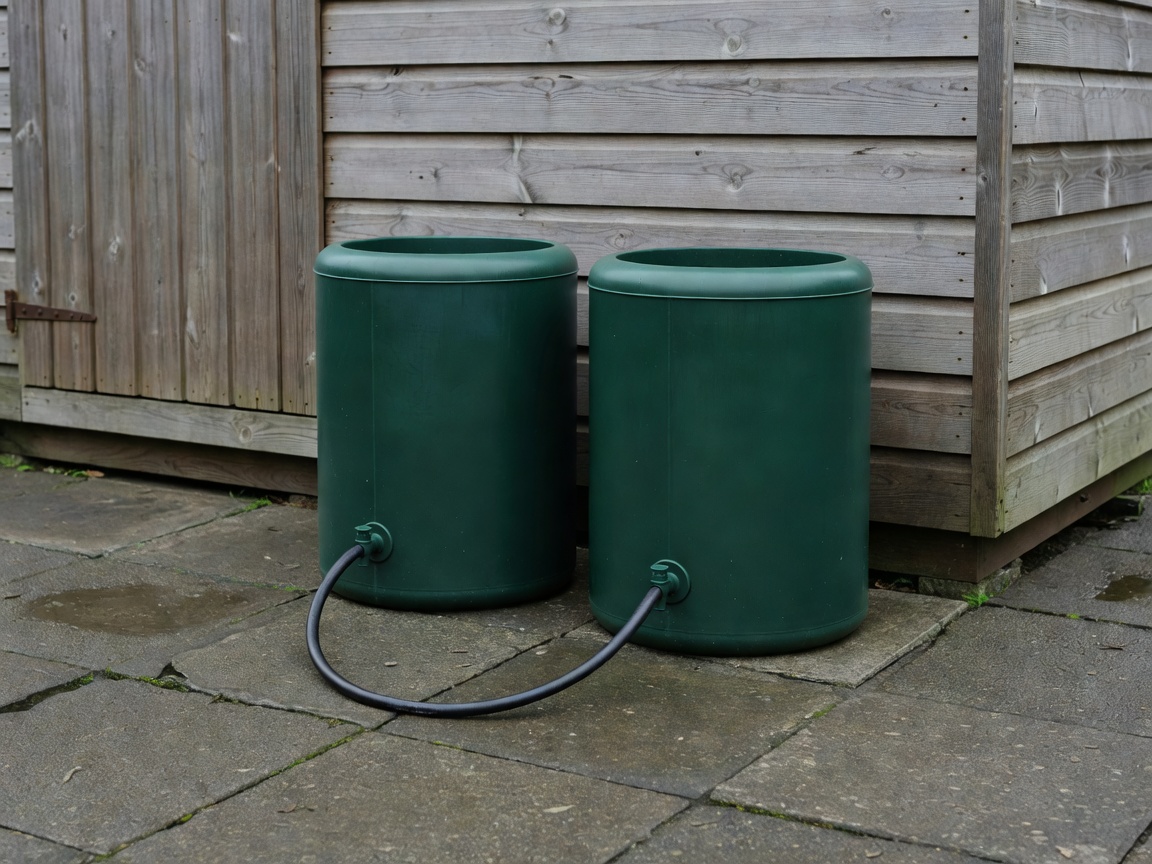
Linking butts at the base lets them fill and empty together. Use opaque containers to limit algae, fit lids that lock or need a tool to open, and cover every opening with mesh around 1 mm to stop mosquitoes breeding. A child can drown in a small depth of water, so lids are not optional.
Gravity has limits
Every metre of height gives roughly 0.1 bar of pressure. A butt on a 50 cm stand gives about 0.05 bar at its tap, far below the 1 bar or so that many pressure-compensating drippers expect. Use drip kits rated for gravity feed, or add a small 12 V diaphragm pump with a pressure switch, powered by a battery and solar panel.
Automated planters for containers and balconies
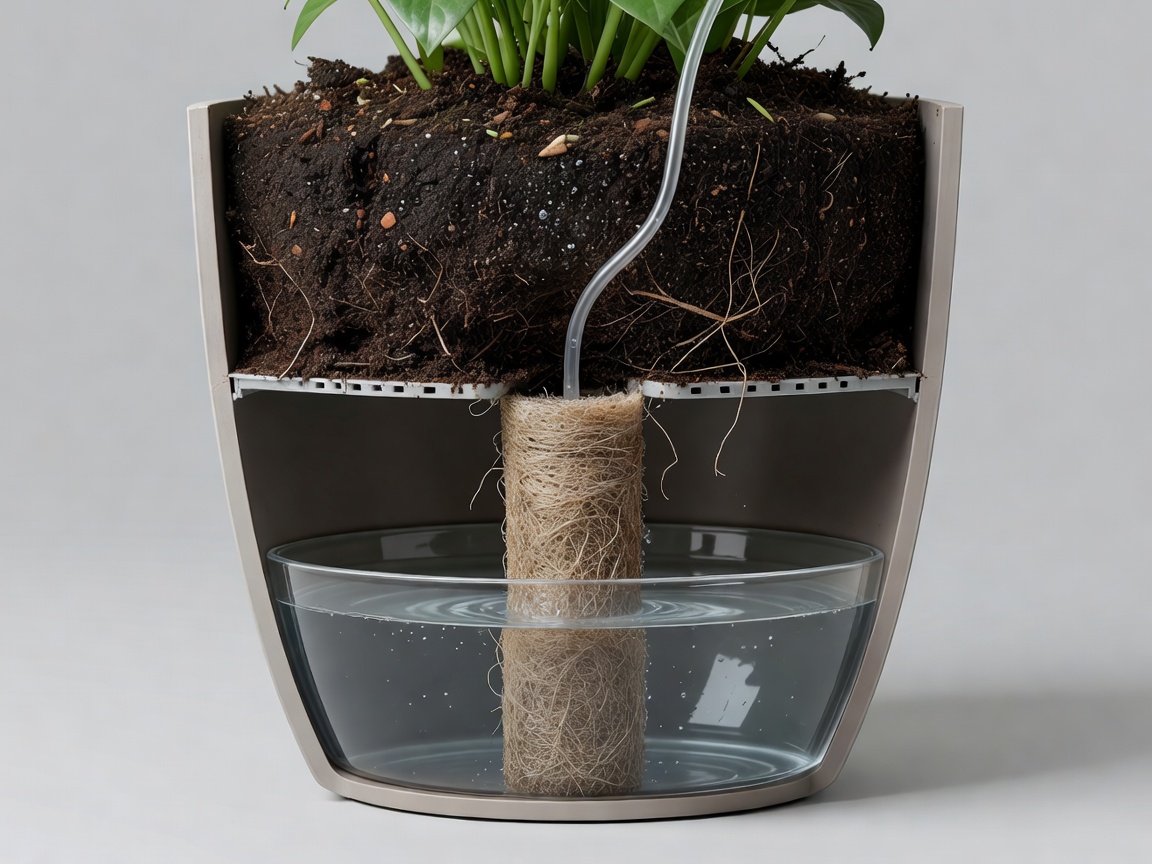
A self-watering planter holds a reservoir below the soil, with a wicking column or fabric drawing water upward as roots need it. On its own it can stretch watering to several days. Adding a little automation extends that further.
A practical build: an ESP32 reads a calibrated capacitive probe, and when the root zone is dry it runs a small 5 V or 12 V pump for a fixed number of seconds, drawing from a refill tank. A float switch in the tank blocks the pump when water runs low, because pumps that run dry overheat. Log each run so you can see consumption rise in a heatwave.
Keep the pump cycle short with a pause afterwards, so water has time to reach the probe before the next decision. Otherwise the controller sees "still dry" and keeps pumping.
Collected rainwater is for plants, not people. Don't drink it. For edible crops, apply it to the soil rather than over leaves you'll eat raw, and clean butts annually. Before winter frosts, drain pumps, exposed taps and microtube so ice doesn't split them.